
Blog
How to Get an After-the-Fact Permit in Duval County
Built or repaired without a permit in Jacksonville? Learn the steps, costs, and inspection rules for an after-the-fact permit in Duval County.
Key Takeaways
-
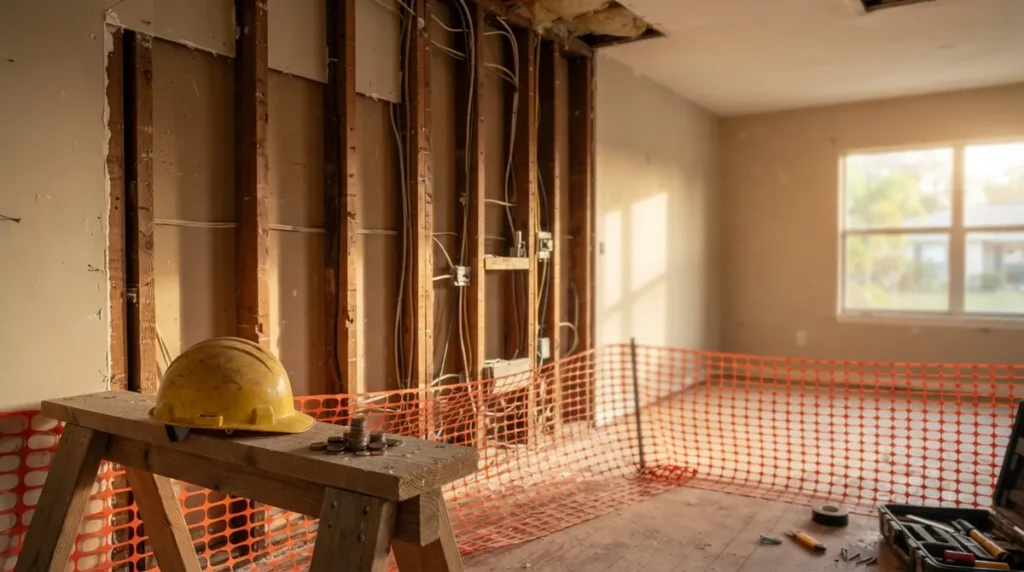
Stop work and leave concealed areas open, since BID may require walls, framing, or wiring to be exposed for inspection and covering them can turn a simple review into demolition.
-
Call the City of Jacksonville Building Inspection Division at 904-255-8500 to confirm scope, fees, and required documents before assuming any exemption applies.
-
An after-the-fact permit starts a formal code review but is not automatic approval, and it does not erase the $250 fine the City cites for starting work without applying first.
-
Budget beyond the permit fee: the $80 or $150 BID minimums are only a start, and drawings, engineering letters, and corrective work can add significant cost.
-
Verify whether a Notice of Commencement is required, since City pages cite different thresholds ($5,000 vs. $2,500) and missing it can pause inspections.
-
Gather photos, receipts, product labels, and old paperwork early, because progress photos and engineer verification can sometimes reduce how much concealed work must be opened.
So you just found out that a deck, a re-roof, a garage conversion, or a water heater swap in Jacksonville never got a permit. Maybe you bought the house that way. Maybe a contractor said, "Don't worry, I'll handle it," and then went quiet. First, take a breath. This is more common than you'd think, and it is very fixable.
An after-the-fact permit in Duval County is simply a permit application filed for regulated work that was started or finished before the required permit was issued. The City of Jacksonville's Building Inspection Division (BID) reviews the work, decides what proof it needs, and tells you what inspections or corrections come next. It does not wave the work through automatically, and a permit does not erase penalties. But with the right plan, you can bring the work into compliance and get back to your life, your sale, or your next job.
This friendly guide walks you through the process step by step, what it may cost, what to expect from inspectors, and how to avoid the mistakes that stall most files. Whether you're a homeowner, a contractor, a solar company, or a real estate pro, you'll find a clear path below.
What an After-the-Fact Permit Means in Duval County
In Jacksonville, work that physically changes or adds to a structure generally needs a permit before it begins. The City lists examples such as additions, pools, re-roofing, garage conversions, water-heater replacement, air-conditioning work, and electrical service or rewiring. If any of that happened without a permit, an after-the-fact (ATF) permit is the usual path to legalizing it.
Here's what the process is and isn't:
- It is a formal review of existing work against the applicable codes.
- It is not an automatic approval. BID may require plans, corrections, or even exposure of concealed work.
- It is not penalty-free. The City's residential guidance says starting work without applying first is unlawful and punishable by a $250 fine, and other charges may apply depending on the project.
Most properties in Duval County fall under the City of Jacksonville's Building Inspection Division. One exception worth knowing: Duval County Public Schools runs its own code-enforcement office for facilities it owns or leases. Not sure which jurisdiction controls your address? Our Duval County permitting page and Jacksonville guide are good places to start.
Who Needs One? Common Situations We See
Different readers land here for different reasons. Here are the patterns that come up again and again:
| Situation | Who it affects | Typical example |
|---|---|---|
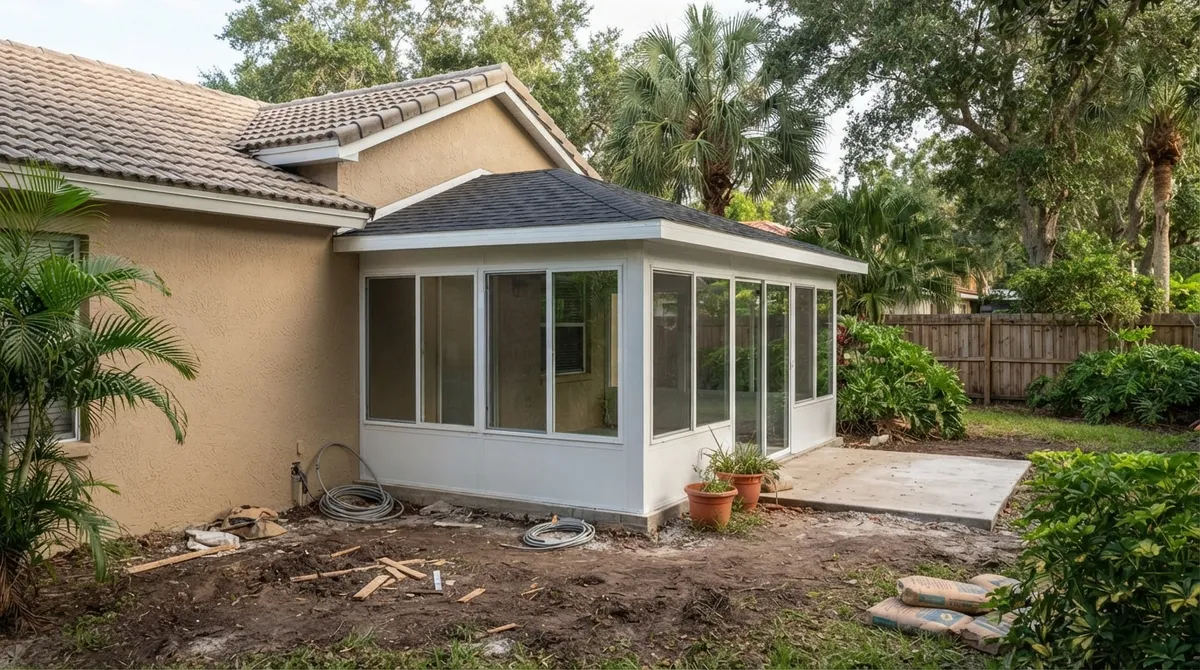
| Inherited unpermitted work | Homeowners, buyers, investors | Enclosed lanai or addition found during a home inspection |
| Contractor skipped the permit | Homeowners, general contractors | Re-roof or AC change-out finished with no permit pulled |
| Closing is stalled | Realtors, sellers, buyers | Lender or title company flags open or missing permits |
| Installed before approval | Solar and trade contractors | System installed before the permit was issued |
| Code enforcement notice | Property owners | Neighbor complaint triggers an inspection |
If your situation involves a sale, you may also want to read about what happens when an open permit is found at closing. And if a violation notice is already in your mailbox, our code compliance violation help can walk you through it.
How to Get an After-the-Fact Permit in Duval County: Step by Step
The exact submittal package depends on the project, and BID has the final say. But the general sequence below is how most Jacksonville ATF permits move forward.
- Stop work and don't cover anything up. If the job is unfinished, pause it. If walls, ceilings, or decking are still open, leave them open. Inspectors may need to see framing, wiring, plumbing, or fastening, and the City warns that concealed work may have to be opened or removed.
- Gather what you know. Note the address, parcel number, approximate dates, who did the work, and the scope. Photos, receipts, product labels, and any old paperwork all help.
- Contact the Building Inspection Division. Call BID at 904-255-8500 or visit 214 N. Hogan Street, Jacksonville, FL 32202. Explain the property and the scope, and ask what they will require. Don't assume an exemption applies until BID confirms it.
- Document existing conditions. For many projects, that means as-built drawings, a site plan, product approvals, or an engineer's letter confirming the work meets code. Our as-built drawings and engineer letters services exist for exactly this.
- Submit the permit application and supporting documents. File the applicable permit for each trade involved (building, electrical, plumbing, mechanical) along with plans or supporting paperwork.
- Pay the assessed fees. Costs vary by permit type and project details (more on that below).
- Complete any exposure or corrective work. If inspectors need to see inside a wall or under a surface, you'll open it. If something doesn't meet code, you'll correct it.
- Pass the required inspections. Once everything checks out, the permit can be finaled, and your records are clean.
This is a general outline, not a guaranteed City checklist. Treat BID's direction on your specific project as the final word.
What Documents and Plans You May Need
There's no one-size-fits-all package. A small water heater swap may need little more than an application, while an unpermitted addition can require a full set of sealed drawings. Here's a realistic range:
| Project type | Documents often requested | Notes |
|---|---|---|
| Water heater or AC replacement | Application, equipment specs, trade license info | Usually the simplest ATF files |
| Re-roof | Application, product approvals, roof details | May need photos or engineer verification |
| Electrical rewiring or service | Application, load info, possibly exposed wiring for inspection | Walls may need to be opened |
| Garage conversion or addition | As-built plans, site plan, structural details | Often needs sealed drawings |
| Pool, enclosure, or deck | Site plan, structural and wind-load documentation | Engineering letter commonly helps |
Regulated design or contracting work may require appropriately licensed professionals, so verify licensing before anyone touches your file. If you plan to act as your own contractor on a homestead, our owner-builder permit page explains the rules.
What Will It Cost?
Here's the honest answer: there's no single flat "after-the-fact price" in Duval County. Jacksonville's published fee schedule lists minimum BID permit fees of $80 for permits that don't require an inspection and $150 for permits that require one or more inspections. The total depends on permit type and project details, so your actual number may be higher.
Costs to plan for fall into a few buckets:
- Permit fees: assessed by BID based on the work.
- The $250 fine: the City's residential guidance cites it for starting work without applying first. Confirm current amounts and any additional charges with BID.
- Professional documentation: drawings, engineering letters, or product verification where required.
- Corrective work: opening concealed areas, repairing them afterward, and fixing anything that doesn't meet code.
For a deeper look at budgeting, see our breakdown of after-the-fact permit costs in Florida.
Will Jacksonville Make You Open Walls?
Sometimes, yes, and it's one of the most common worries we hear. The City's guidance states that inspectors may require portions of construction to be opened or removed so required elements can be inspected. Whether that applies to you depends on what was built and what can be verified another way.
Some ways to reduce the pain:
- Keep any photos taken during construction. Progress photos can sometimes support the review.
- Ask BID early whether limited openings will do instead of full demolition.
- Use an engineer's letter or field verification where appropriate to document hidden conditions.
- Plan repairs and finishes after the final inspection, not before.
Think of it like a doctor asking for an X-ray: slightly inconvenient, but it gets everyone to a clear answer.
Don't Forget the Notice of Commencement
For qualifying projects, a Notice of Commencement may be required before inspections can be scheduled. Here's where it gets confusing: Jacksonville's FAQ says one is required on most jobs over $5,000, while a separate City residential-inspection page cites a state-law threshold of more than $2,500, including labor and materials.
Because the published pages show different numbers, verify the current threshold and filing requirements with BID or the Clerk of Court before you schedule inspections. It's a small step that prevents a frustrating delay. We cover the basics in our Notice of Commencement guide.
Which Codes Apply?
Jacksonville identifies the Florida Building Code, 8th Edition (2023), as the applicable code family for projects in Duval County. That includes the Building, Residential, Existing Buildings, Plumbing, Mechanical, and Fuel-Gas codes. The Existing Buildings volume matters a lot for ATF work, since it governs how already-built construction is evaluated.
Wind-load and product-approval requirements matter most for roofs, windows, doors, and enclosures, which is why those jobs often need extra documentation. If your project is structural, our structural engineering team can prepare sealed documentation in-house.
Mistakes That Slow Down After-the-Fact Permits
After years of helping owners and contractors through Florida's permitting maze, these are the stumbling blocks we see most:
- Covering up work before BID weighs in. Drywall and paint can turn a simple review into a demolition job.
- Assuming an exemption applies. The City lists limited examples of work that may not need a permit, but verify your exact scope first.
- Skipping the engineer. Structural, roof, and enclosure work often needs sealed verification.
- Hiring unlicensed help. It can create a second problem on top of the first.
- Ignoring the Notice of Commencement. Missing it can pause inspections.
- Letting the permit expire. Once issued, keep inspections moving. If one lapses, see how to close an expired permit in Florida.
Tips for Contractors, Solar Companies, and Real Estate Pros
Different readers need different strategies, so here's a quick cheat sheet.
General contractors and trades
If a prior contractor left a mess, or one of your own jobs slipped through, resolve it quickly. Open permits and violations can follow a license. Our services for general contractors cover filing, tracking, and revisions so your crew stays on schedule.
Solar companies
Installing before approval creates risk for both you and the customer. Clean documentation of the structural and electrical scope speeds the review. See how we support solar contractors.
Realtors, investors, and buyers
Permit issues can derail a closing fast. Research the permit history early, price in the cost of legalizing, and build in time. Our open permit search tool and realtor closing support can help you spot problems before they become surprises.
Homeowners and design professionals
If you're planning a legitimate renovation, pulling the permit first is far cheaper and calmer than fixing it later. Architects and designers can lean on outsourced architectural drafting to keep submittals moving without adding staff.
How a Permitting Professional Can Help
You don't have to do this alone. A Florida permitting-services team can document existing conditions, coordinate plans and trade permits, communicate with BID, and organize the inspection and correction sequence so nothing falls through the cracks. The property owner remains responsible for making sure required permits are obtained, but good support makes the process dramatically less stressful.
That's the role 1 Contractor Solutions plays. We handle permit filing, tracking, plan review coordination, and revisions across all 67 Florida counties, with in-house drafting and sealed engineering so we can fix reviewer comments without waiting on an outside consultant. Learn more about our after-the-fact and expired permit services, or see what clients say on Google — 1 Contractor Solutions reviews. You can also follow us on LinkedIn and follow us on Facebook for Florida permitting updates. For official guidance, always confirm requirements with the City of Jacksonville's residential permit page.
Your Quick Action Checklist
Before you pick up the phone, run through this list:
- Stop work and leave concealed areas open.
- Collect photos, receipts, contracts, and product information.
- Confirm the correct jurisdiction (City of Jacksonville BID, or a separate authority).
- Call BID at 904-255-8500 to confirm the scope, fees, and what documents they'll need.
- Verify Notice of Commencement requirements.
- Line up licensed professionals for any drawings or engineering.
- Schedule inspections only after required paperwork is in place.
Ready to Get Your Duval County Permit Sorted?
An unpermitted project feels heavy, but it's a solvable problem. Contact BID, document what's there, correct what needs correcting, and pass the inspections. That's the whole road. If you'd rather have a team that does this every day, we're happy to help. Get a free quote and tell us your address and what happened, and we'll tell you which jurisdiction controls it, what it will take, and how fast we can move. For stalled closings or stop work orders, our urgent permit rescue team responds within 30 minutes, day or night.
FAQs
What is the fine for starting work without a permit in Duval County?
The City of Jacksonville's residential-permit guidance states that starting work without first applying is unlawful and punishable by a $250 fine. Other fees or consequences can depend on the project, so confirm the current amounts with the Building Inspection Division at 904-255-8500 before assuming that's your only cost.
How much does an after-the-fact permit cost in Duval County?
There's no flat after-the-fact price. Jacksonville's fee schedule lists minimum BID permit fees of $80 for permits without inspections and $150 for permits that need one or more inspections, and your total depends on the permit type and project details. Budget for possible drawings, engineering, and corrective work too.
Will Jacksonville make me open walls or remove finished work?
Possibly. The City warns that inspectors may require concealed work to be opened or removed so required elements can be inspected. Progress photos and engineer verification can sometimes reduce how much needs to be exposed, so ask BID early and don't cover anything further.
Do I need a Notice of Commencement before scheduling inspections?
It may be required on qualifying projects. Jacksonville's FAQ says most jobs over $5,000, while another City page cites a state threshold above $2,500 including labor and materials. Since the published thresholds differ, verify the current requirement with BID or the Clerk before you schedule.
Does an after-the-fact permit automatically legalize my work?
No. The permit starts a review. Building Inspection Division staff will determine whether the work complies with the applicable codes and what plans, corrections, or inspections are needed. Once the work passes its required inspections and the permit is finaled, it is properly documented.
We do this work every day across all 67 Florida counties. Call (866) 314-6931 and we will tell you what your situation actually requires — including when you do not need us.
Related services
Permit Facilitation & Filing
You have a crew scheduled, a client asking for dates, and a permit sitting somewhere in a queue you cannot see. We file it, w…
See the servicePlan Review Coordination
A permit in plan review is not one queue. On a commercial project it can be six queues, each with its own reviewer, its own c…
See the serviceReady to get your permit moving?
One call tells you which jurisdiction controls your project, what it will take, and what it will cost. Most of the time we can scope it on the phone.