
Blog
Engineer-Sealed Plans vs. Tear-Out: Which Fix Wins in FL?
Compare after-the-fact engineer-stamped plans in Florida with tear-out. Learn costs, steps, and which fix fits your unpermitted work.
Key Takeaways
-
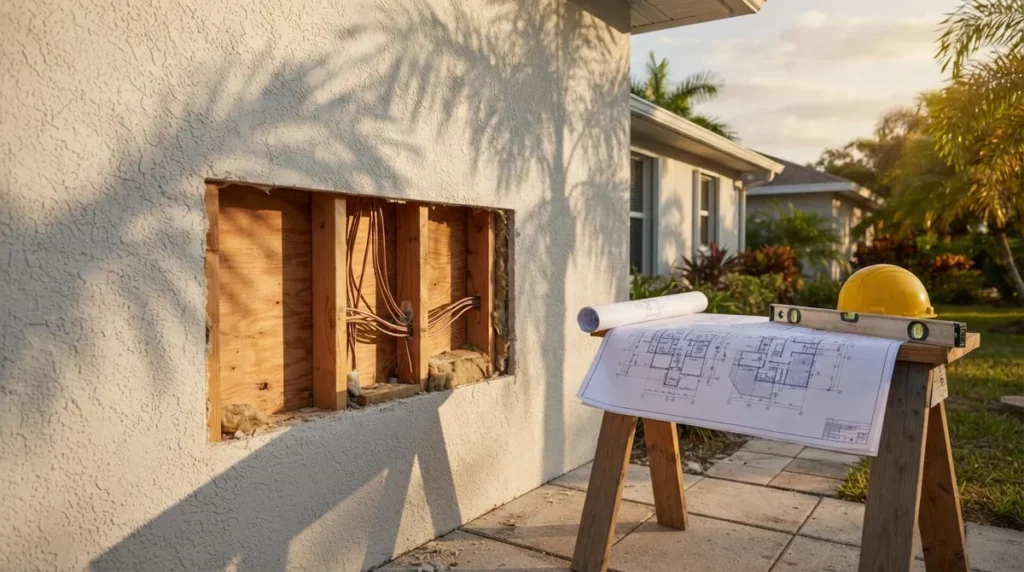
Sealed engineer plans alone do not legalize unpermitted work in Florida; they support an after-the-fact permit application that the local building department must review, inspect, and close out.
-
Start by contacting your local building department or code enforcement and requesting written submittal and inspection requirements before spending money on engineering.
-
Sealed-plans route usually wins for sound, valuable work like additions or enclosures, while tear-out fits small, unsafe, or unverifiable work; many projects end up as a hybrid.
-
Concealed work behind drywall, stucco, or slabs may require exposure, testing, or added calculations, and if verification costs approach rebuild costs, removal may be more sensible.
-
Under Florida Statutes §553.79, after-the-fact permit fees can reach up to four times the standard fee, and code-enforcement fines may be charged separately, so confirm your case status.
-
Match the engineer's discipline (structural, electrical, or mechanical) to the work, and only licensed professionals should perform any corrective construction under permit.
So you just found out that the deck, the addition, or the garage conversion at your Florida property was built without a permit. First, take a breath. You are far from the first person to land here, and there is a well-worn path out of it. One of the most common questions we hear is about after the fact engineer stamped plans in Florida: what they are, whether they actually fix the problem, and whether tearing the work out would be the smarter move.
Here is the honest answer. A sealed set of plans is a powerful tool, but it is not a magic stamp. It does not automatically legalize anything. It is the document package that lets your local building department evaluate the work through an after-the-fact permit application. Whether that route beats demolition depends on what was built, how it was built, and what is hidden behind the walls.
In this friendly guide, we compare the two main paths side by side, walk through how the process works, flag the costs and pitfalls, and help you decide which option fits your situation. Whether you are a homeowner, a contractor, a solar installer, or a real estate pro, you will leave with a clear next step.
What Are After-the-Fact Engineer-Stamped Plans?
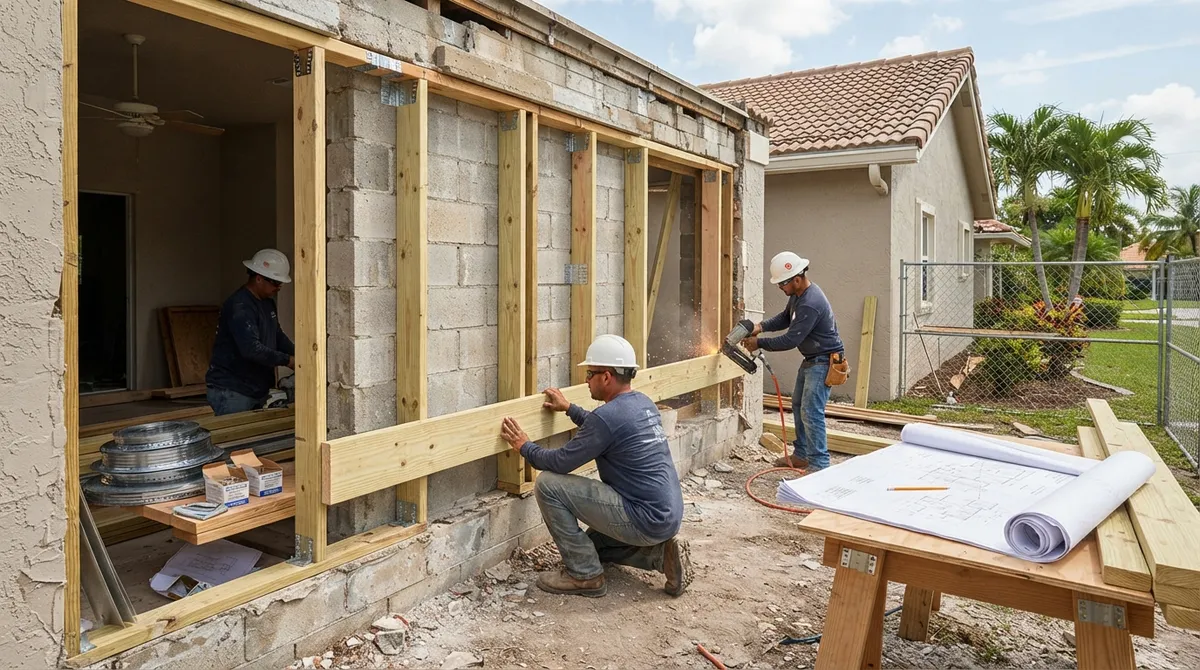
In plain English, this means hiring a Florida-licensed professional engineer to evaluate work that was already completed without a required permit. The engineer documents what exists, assesses it within their licensed discipline, and prepares plans, calculations, or a report. That package gets submitted with a local after-the-fact permit application.
A few important things to understand up front:
- It is not a single statewide permit category. Each city and county sets its own application, inspection, and documentation rules.
- Under Florida Statutes §471.025, final engineering documents must be signed, dated, and sealed, and an engineer cannot seal work outside their competence or specialty.
- Under Florida Statutes §553.79, covered construction generally needs a permit, and the local enforcing agency reviews plans for Florida Building Code compliance before issuing one.
- A seal is not a substitute for inspections, and it is not proof that concealed work is compliant.
Think of the engineer as your translator. They speak the building department's language, and they turn "we built this a few years ago" into documentation a plan reviewer can actually evaluate. For a deeper primer, see our guide on what after-the-fact permitting in Florida really means.
The Two Paths: Sealed Plans vs. Tear-Out
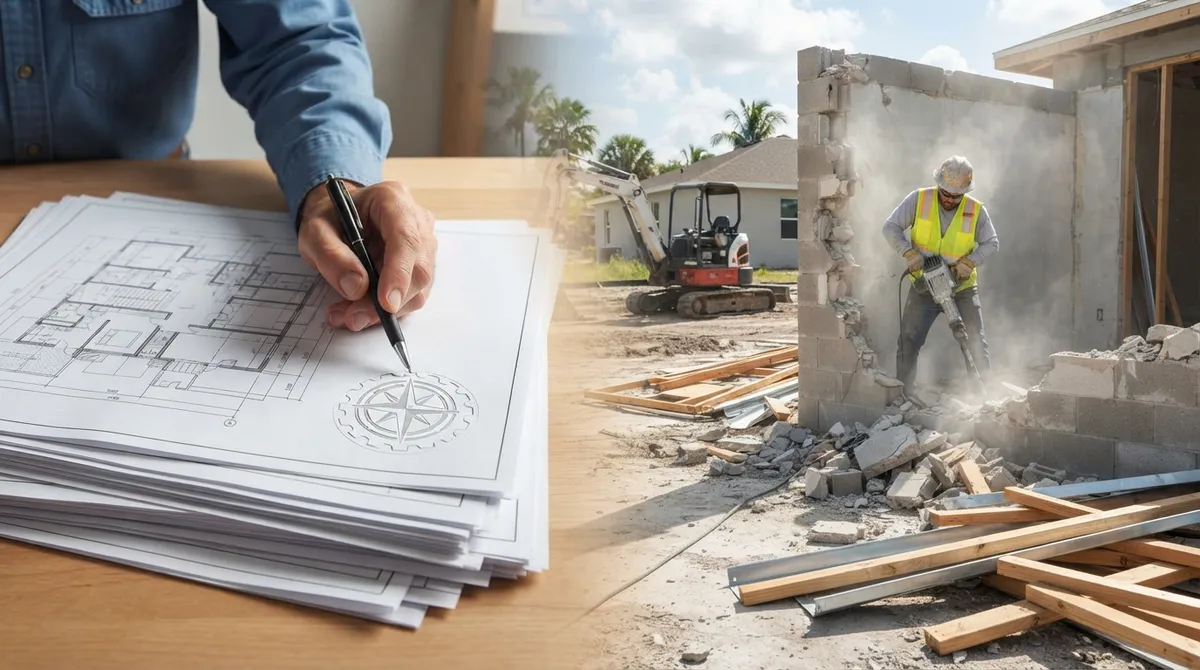
When unpermitted work comes to light, owners generally face two choices. You can pursue an after-the-fact permit supported by engineered documentation, or you can remove the work entirely. There is also a third reality: sometimes the engineering review reveals that parts must be corrected, which blends both paths.
| Factor | After-the-Fact Permit With Sealed Plans | Tear-Out / Removal |
|---|---|---|
| Keeps existing work | Yes, if it passes review and inspection | No |
| Upfront cost | Engineering, drafting, permit fees (up to four times the usual permit fee under §553.79) | Demolition, debris hauling, and restoration |
| Timeline | Varies by jurisdiction and scope | Often faster, but may still need a demolition permit |
| Resale impact | Strong: work becomes documented and closed out | Neutral: no addition, but no violation either |
| Risk of surprises | Concealed work may need to be exposed or tested | Low once removed |
| Best for | Sound, valuable work that can meet code | Minor, non-compliant, or unverifiable work |
Notice that the sealed-plans route is usually the better value when the work is substantial, structurally sound, and worth keeping. Tear-out makes more sense when the work is small, clearly unsafe, or impossible to verify.
Why a Sealed Plan Alone Will Not Close the Case
This is the number one misunderstanding we see. Owners assume that once an engineer stamps the drawings, the problem disappears. Not quite.
A building department will typically still require a permit application, plan review, inspections, and a final sign-off. An engineer's report alone does not close a permit or a code-enforcement case. The seal supports the application; it does not replace the process.
That is why coordination matters. Before assuming a visual walkthrough is enough, the engineer should check with the building department about what they will actually accept. If you are not sure which office controls your property, our building department lookup tool is a handy first stop, and our article on which Florida jurisdiction reviews your project explains why city-line properties can be tricky.
Step-by-Step: How the Sealed-Plans Route Works
While every jurisdiction has its quirks, the general sequence looks like this:
- Contact the building department or code enforcement. Disclose the unpermitted work and request written submittal and inspection requirements for your property.
- Pull the property history. Check for open permits, prior approvals, and any violation notices using an open permit search.
- Hire a Florida-licensed engineer with relevant experience. Match the engineer's discipline to the work: structural, electrical, mechanical, or a combination.
- Document existing conditions. This often includes measured as-built drawings, photographs, product approvals, and calculations.
- Prepare and submit the plan package. Drawings are signed, dated, and sealed, then filed with the after-the-fact permit application.
- Respond to reviewer comments. Expect a round or two of questions; this is normal.
- Pass inspections and close out the permit. Corrective work, if required, must be permitted and performed by a properly licensed contractor.
If you need accurate field documentation, our team creates as-built drawings and engineer letters in-house, and our structural engineering and MEP engineering departments can seal the work directly.
The Big Question: What About Work You Cannot See?
Here is where things get real. Can an engineer approve work that is already covered by drywall, stucco, or a concrete slab? Not by guessing. The building department may require you to open or expose concealed construction, perform testing, or provide additional calculations and photographs.
Common examples include:
- Framing, connectors, and hurricane straps behind finished walls
- Footing size and reinforcement under a slab
- Electrical rough-in and grounding inside walls
- Truss verification for roof or attic modifications
This is often the deciding factor between the two paths. If verifying concealed work would cost nearly as much as rebuilding, tear-out or partial reconstruction may be more sensible. Our article on truss verification after the fact in Florida shows how this plays out in practice.
Cost Comparison: What Should You Expect?
Costs vary widely by county, building type, and scope, so treat this table as a framework rather than a price list.
| Cost Item | Sealed-Plans Route | Tear-Out Route |
|---|---|---|
| Engineering and drafting | Yes: structural, MEP, as-builts, letters | Usually none |
| Permit fees | Up to 4x the usual fee per §553.79; confirm local schedule | Possible demolition permit fee |
| Exposure and testing | Possible, if concealed work must be verified | None |
| Corrective construction | Possible, with permits | Demolition labor and disposal |
| Code-enforcement penalties | May apply separately | May still apply until the case is closed |
Two cost notes worth remembering. First, the after-the-fact fee multiplier is a statutory ceiling, and each jurisdiction decides how it implements it. Second, code-enforcement fines can run separately from permit fees, so always confirm your case status. We break this down further in our guide to after-the-fact permit costs in Florida and the penalties for building without a permit.
When Sealed Plans Win
The after-the-fact engineered route usually comes out ahead when:
- The work is a significant investment, such as a room addition, pool enclosure, or outdoor kitchen
- It appears structurally sound and was built with decent materials
- You plan to sell or refinance and need clean documentation
- A lender, title company, or appraiser has flagged the issue
- The building department has indicated it will review an after-the-fact application
For real estate pros and investors, this path is often the only one that keeps a closing on track. If you are in that situation, our realtor and closing support and our article on open permits found at closing are worth a read.
When Tear-Out Wins
Removal can be the smarter, cheaper call when:
- The work is small, cosmetic, or easily replaced
- It clearly violates setbacks, flood-zone rules, or zoning that cannot be varied
- Verifying concealed construction would be impractical or cost-prohibitive
- An engineer determines the work is unsafe or cannot be made code compliant
In flood zones especially, rules like the 50 percent rule can complicate things. Our overview of the FEMA 50 percent rule in Florida explains why some projects face extra scrutiny. And if you are wondering whether demolition is truly unavoidable, see will you really have to demolish unpermitted work.
The Hybrid Outcome Nobody Mentions
Many projects land in the middle. The engineer finds that most of the work is acceptable but a few elements need correction: a missing connector, an undersized beam, or an unapproved window product. You correct those items under a permit, and the rest stays.
That hybrid result is common, and it is perfectly fine. It is also why hiring an engineer who communicates with the building department early pays off. A good engineer helps you avoid both extremes: unnecessary demolition and an unrealistic submittal.
If your case involves an active violation, you may also want to review our resources on code compliance violations and the after-the-fact and expired permit process.
Tips for Contractors, Solar Companies, and Design Pros
If you work in the trades, unpermitted work sometimes lands in your lap through a prior owner, a former subcontractor, or a customer who skipped a step.
- General contractors: Confirm your license and municipal registration before filing, since only properly licensed contractors can perform corrective work. See who can pull a permit in Florida.
- Solar companies: Unpermitted arrays need structural and electrical documentation. Read about legalizing unpermitted solar installs.
- Architects and designers: Outsourcing the as-built drafting and sealed engineering keeps your team focused on design work.
- Homeowners: Start with the building department, disclose the work, and get the requirements in writing before spending money.
How 1 Contractor Solutions Can Help
We are Florida's outsourced permitting department, and after-the-fact files are exactly the kind of work we take on. Our drafting and engineering are in-house, so when a reviewer flags a comment, we fix it directly instead of waiting on an outside consultant. We work across all 67 Florida counties and handle the whole process: investigation, as-builts, sealed plans, filing, tracking, revisions, and closeout.
Curious how other owners have fared? Visit us on Google — 1 Contractor Solutions to read what our customers say. You can also follow us on LinkedIn or follow us on Facebook for practical Florida permitting tips.
For the official legal text, you can read the statutes directly: Florida Statutes §553.79 covers permitting and after-the-fact fees, and the engineering sealing requirements live in Chapter 471 of the Florida Statutes. Always verify current text and your local fee schedule before you file.
The Bottom Line
After-the-fact engineer-stamped plans in Florida are not a loophole and not a guarantee. They are the documentation that lets your local building department decide whether your existing work can be permitted, corrected, or removed. For valuable, sound work, the sealed-plans route usually wins. For small, unsafe, or unverifiable work, tear-out may be the cleaner answer. And for many projects, a hybrid of the two is the realistic result.
The best move is to start with the right information. Talk to your building department, document what exists, and bring in an engineer who knows how to work with local reviewers. Ready to find out which path fits your property? Get a free quote and let our team map out the fastest, most cost-effective route to a closed permit.
FAQs
Can I get an after-the-fact building permit in Florida?
In many cases, yes. Florida law lets local building departments issue permits for work already completed, usually with an after-the-fact fee of up to four times the standard permit fee. The exact process, documents, and inspections are set by your city or county, so check with them first.
Do after-the-fact plans in Florida have to be signed and sealed by an engineer?
Not always, since requirements vary by jurisdiction and project type. But structural, electrical, and mechanical work often needs sealed documentation, and Florida Statutes §471.025 requires an engineer's final documents to be signed, dated, and sealed. Your building department will tell you what it expects in writing.
Can an engineer approve work that is already covered by drywall or concrete?
Not on a hunch. The building department may require you to open walls, expose framing, or perform testing so the work can be verified. If concealed work cannot be verified, correction or removal may be needed.
Does an engineer's report close a code-enforcement case?
No, a report alone will not do it. You typically need an approved after-the-fact permit and a final inspection or other required closeout. The engineer's seal supports the application but does not replace the permit process.
What should I do first if I discover unpermitted work at my property?
Contact the building department or code-enforcement office for your property's jurisdiction, disclose the work, and ask for written submittal and inspection requirements. Then hire a Florida-licensed engineer with relevant experience, and use a licensed contractor for any corrective construction under a permit.
We do this work every day across all 67 Florida counties. Call (866) 314-6931 and we will tell you what your situation actually requires — including when you do not need us.
Related services
Permit Facilitation & Filing
You have a crew scheduled, a client asking for dates, and a permit sitting somewhere in a queue you cannot see. We file it, w…
See the servicePlan Review Coordination
A permit in plan review is not one queue. On a commercial project it can be six queues, each with its own reviewer, its own c…
See the serviceReady to get your permit moving?
One call tells you which jurisdiction controls your project, what it will take, and what it will cost. Most of the time we can scope it on the phone.