
Blog
12 After the Fact Shed Florida Mistakes to Avoid in 2026
Avoid 12 common after-the-fact shed permit mistakes in Florida. Learn local rules, required documents, and how to legalize your shed in 2026.
Key Takeaways
-
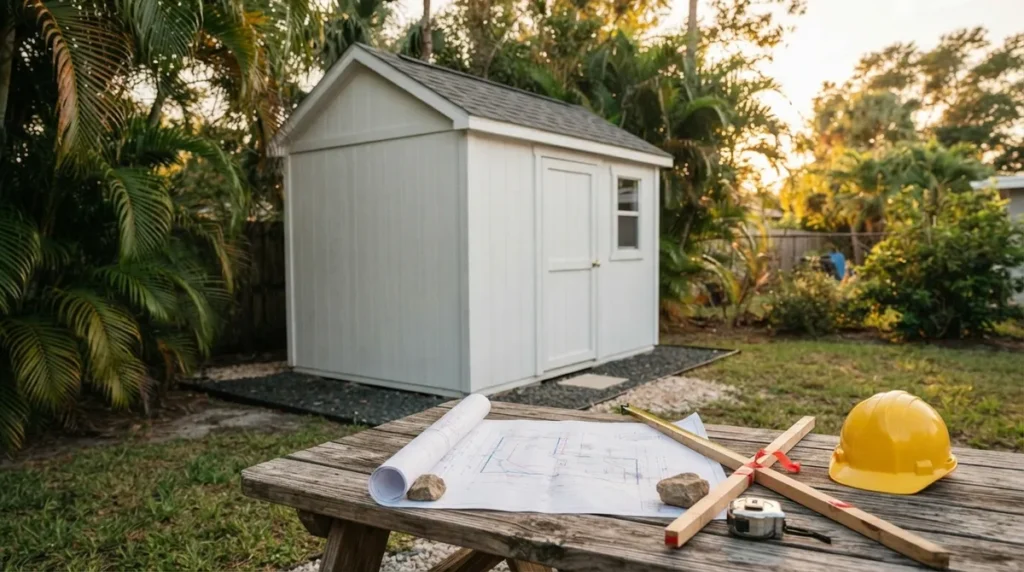
Florida has no statewide rule exempting all small or prefab sheds from permits; local building departments set the procedures, zoning limits, setbacks, and wind-load requirements.
-
The state's 250 sq ft exemption in §489.103 covers contractor licensing only, not permits, zoning, or code compliance, so a delivered prefab shed may still need local approval.
-
Call the building department with jurisdiction before doing anything else to confirm whether your shed needs a zoning permit, a building permit, or both, and to get the current fee schedule.
-
Check setbacks, utility and drainage easements, lot coverage, and flood zone status before filing, since a shed can meet building code and still fail zoning and require relocation or removal.
-
Submit a complete package, typically proof of ownership, application, survey or site plan, dimensions, construction details, and product approvals, because missing items usually trigger correction notices and restart review.
-
Address anchoring and wind resistance early, since undocumented tie-downs may require a field inspection or engineer's review, and approval is never guaranteed if the shed cannot meet requirements.
So you have a shed in your backyard, and somewhere along the way it dawned on you that nobody ever pulled a permit for it. Maybe you bought the house that way. Maybe a handyman set it up on a Saturday and said, "Oh, that doesn't need anything." First off, take a breath. You are in very good company, and this is a fixable situation far more often than people fear.
The trouble is that the wrong first move can turn a simple cleanup into a headache with fees, inspections, and sometimes a relocation. An after the fact shed Florida permit is a local approval for a shed that was already installed or built without required sign-off, and the rules change depending on which city or county holds jurisdiction over your parcel.
In this friendly guide, we will walk through 12 common mistakes we see owners, contractors, and agents make, plus how to dodge each one. Whether you are a homeowner, a general contractor, or a Realtor trying to rescue a closing, you will find practical steps you can use today. Let's get your shed on solid, legal footing.
What an After-the-Fact Shed Permit Actually Is
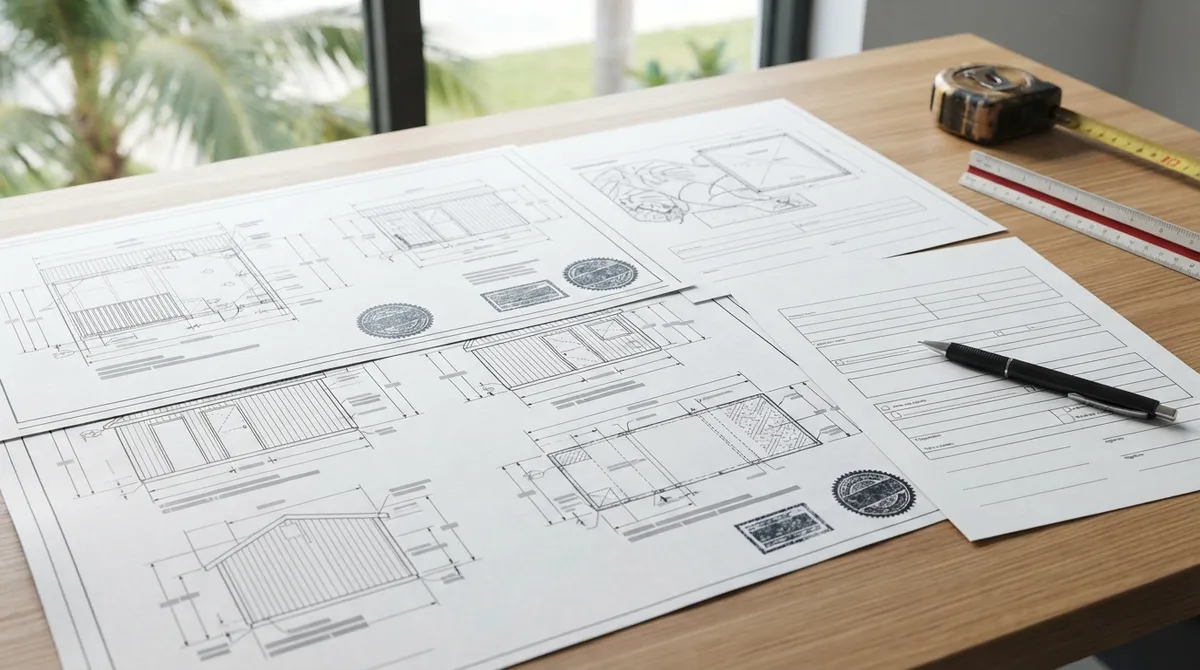
An after-the-fact permit is an application you file once the shed is already standing. It does not automatically legalize the structure. The local building department may ask for plans, inspections, corrections, relocation, or even removal if the shed cannot meet the rules.
Florida does not have one statewide rule that makes every small or prefabricated shed permit-free. The Florida Building Code and state law set the baseline, but local governments decide the procedures, zoning limits, setbacks, floodplain rules, and wind-load requirements. That is why the same shed can be handled differently in two neighboring counties.
If your project also involves other unpermitted work, our guide on unpermitted work in Florida and how to legalize it shows the bigger picture.
Mistake 1: Assuming Small or Prefab Sheds Are Always Exempt
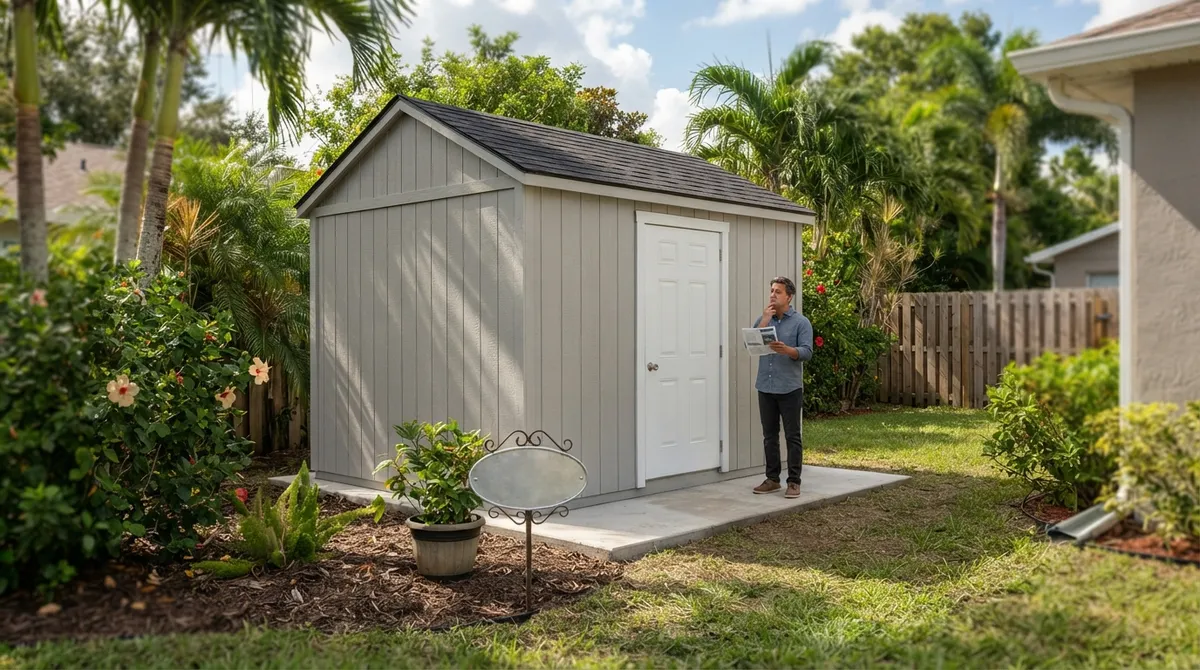
This is the number one myth. Florida Statutes §489.103 exempts certain sales, delivery, assembly, or tie-down of prefabricated portable sheds up to 250 square feet from specific contractor-licensing requirements. That is a licensing exemption, not a blanket pass on permits, zoning, or code compliance.
State law (§553.80) also notes that site erection, assembly, and construction of covered buildings, including storage sheds, remain subject to local permitting and inspections. In plain English: a shed that arrived on a truck fully assembled can still need local approval.
Mistake 2: Using One County's Rules for Your Property
Local thresholds really do vary, and borrowing a neighbor's advice from another county can steer you wrong. Here is a snapshot of how differently places handle it:
| Jurisdiction | What the published guidance says |
|---|---|
| Orange County | All structures require a permit; structures of 120 sq ft or less run through a zoning permit pathway, generally without building-code review or engineered plans |
| Charlotte County | Zoning review plus a building permit for small detached sheds; limited exception for certain plastic or rubber manufactured sheds of 68 sq ft or less |
| Jacksonville | Site plan requested; structural drawings and product-approval information required for residential sheds 150 sq ft or larger |
These are local thresholds, not statewide standards. Always confirm with the building department that actually has jurisdiction. Our building department lookup tool can help you find the right office, and our guide on which Florida jurisdiction reviews your project explains why the answer is not always obvious near city lines.
Mistake 3: Skipping the Call to the Building Department
Many owners start tearing things apart or hiring someone before ever asking the one office that decides the outcome. A short, friendly call (or a visit to the online portal) can tell you whether your shed falls under a zoning-only pathway or a full building permit, what documents they want, and the current fee schedule.
Ask these questions before doing anything else:
- Does a shed of my size require a zoning permit, a building permit, or both?
- Is there a specific after-the-fact or violation-resolution process?
- What documents and drawings do you require for my shed's size?
- What are the current fees and any added after-the-fact charges?
- Will an inspection require opening up any walls, anchors, or tie-downs?
If you would rather have an experienced team handle that conversation, 1 Contractor Solutions offers permit facilitation and filing across all 67 Florida counties.
Mistake 4: Ignoring Setbacks, Easements, and Lot Coverage
A shed can satisfy the building code and still fail zoning. Reviewers commonly look at:
- Setbacks from side and rear property lines
- Utility and drainage easements
- Accessory-structure rules and maximum lot coverage
- Distance from septic systems and wells
- Drainage patterns and flood zones
If the shed sits too close to a property line or on an easement, the fix may be moving it, modifying it, or removing it before approval. Catching that early saves money. A current survey or scaled site plan is your best friend here, and our site plan services can prepare one that reviewers actually accept.
Mistake 5: Submitting an Incomplete Application Package
Incomplete packages are the quiet killers of timelines. A typical after-the-fact shed application may require several items, and what is needed depends on size and construction type.
- Proof of ownership and a completed permit application
- A survey or scaled site plan showing the shed and all property lines
- Shed dimensions, height, and use
- Construction details, such as framing, floor, and anchoring
- Product-approval information for doors, windows, or manufactured components
- Signed and sealed structural plans for larger or site-built sheds
Jacksonville, for example, asks for structural drawings and product-approval information on residential sheds of 150 square feet or more. Missing even one item usually means a correction notice and a restart of the review clock.
Mistake 6: Forgetting Wind Load and Anchoring
Florida wind is no joke, and a shed that is simply sitting on blocks can become a projectile in a storm. Reviewers may look closely at tie-downs, anchoring, and wind resistance, especially for larger sheds. This is where after-the-fact work gets tricky, because you cannot always see what is under or inside a finished structure.
If anchoring was never documented, you may need a field inspection or an engineer's review to verify it. Our engineer letter services and structural engineering team can evaluate what is there and seal the documentation your jurisdiction expects.
Mistake 7: Skipping Engineered or As-Built Drawings When They Are Needed
Smaller sheds in some jurisdictions get through without engineered plans. Larger or site-built sheds often cannot. If your building department asks for signed and sealed plans, a hand sketch will not cut it.
As-built drawings document what actually exists, which is exactly what an after-the-fact review needs. Here is how the document types compare:
| Document | Best used for | Typically needed when |
|---|---|---|
| Site plan or survey | Showing placement and setbacks | Almost every shed application |
| As-built drawings | Documenting the existing structure | The shed was built without plans |
| Sealed structural plans | Proving wind and structural compliance | Larger or site-built sheds |
| Engineer letter | Verifying an existing condition | Anchoring or framing cannot be easily inspected |
Learn more about as-built drawings and why they matter for closeout.
Mistake 8: Not Budgeting for Fees and Corrections
Here is an honest truth: there is no single statewide after-the-fact fee or penalty schedule for sheds. Some jurisdictions add surcharges or double fees for work done without a permit, and others simply charge the standard rate. Inspections, corrections, and re-reviews add to the total.
Do not assume a cost you read online applies to your county. Ask for the current fee schedule, then add a cushion for plan preparation and possible corrections. Our breakdown of after-the-fact permit costs in Florida can help you set realistic expectations.
Mistake 9: Ignoring a Code Enforcement Notice
Sometimes the shed comes to light because a neighbor complained or an inspector drove by. If you receive a notice, ignoring it rarely helps. Violations can escalate, and fines may build over time depending on local rules.
The better path is responding promptly, showing good faith, and starting the permit or corrective process. If you are staring at a notice right now, our code compliance violations team can help you understand your options and respond professionally.
Mistake 10: Waiting Until the Middle of a Sale or Refinance
An unpermitted shed can surface during an inspection, appraisal, or title review, and suddenly everyone is looking at the calendar. Lenders and buyers may ask for the permit to be resolved before closing.
For agents and investors, the smart move is catching it early. Resolve the shed before listing, or build the timeline into the contract. Our Realtor and closing support and guides on open permits found at closing are designed for exactly this scenario.
Mistake 11: Doing a DIY Cleanup That Makes Things Worse
Enthusiastic owners sometimes pour a new slab, add electrical, or enclose the shed before the permit is settled. Any added electrical, plumbing, or conditioned space can raise the review stakes and trigger separate permits.
Before you modify anything, find out what the jurisdiction will accept as-is and what it will not. And if you simply want a hands-off route, consider whether the owner-builder permit process fits your situation or whether a professional should file on your behalf.
Mistake 12: Assuming Approval Is Guaranteed
An after-the-fact application is a request for review, not a promise. If the shed cannot meet setback, flood, or structural requirements, you may be asked to modify, relocate, or remove it. Going in with realistic expectations keeps you flexible.
Here is a simple order of operations that works well for most owners:
- Confirm the jurisdiction and its shed rules.
- Gather a survey or site plan and measure the shed accurately.
- Check setbacks, easements, and flood zone status.
- Prepare required drawings, with engineering if the shed is larger or anchoring is uncertain.
- File the application and respond quickly to reviewer comments.
- Pass inspections and keep your final approval paperwork on file.
Need a deeper walkthrough? See our full guide on how to get an after-the-fact permit in Florida and our overview of after-the-fact and expired permits.
Who Benefits Most From Professional Help
Not everyone needs a full team, but certain situations really do call for one. Here is a quick guide to who tends to benefit:
| Who you are | Common shed challenge | How help speeds things up |
|---|---|---|
| Homeowner | Inherited a shed with no paperwork | Plans, filing, and tracking handled for you |
| General contractor | Client's shed flagged during a larger project | Permit filing and reviewer-comment management |
| Realtor or investor | Shed found at inspection before closing | Faster resolution and clear documentation |
| Designer or trade pro | Needs sealed drawings without in-house engineers | Outsourced drafting and engineering |
1 Contractor Solutions works as Florida's outsourced permitting department, with in-house drafting and sealed engineering, and we can prepare, file, track, and carry your application through approval. You can see what our customers say on Google and follow us on LinkedIn or follow us on Facebook for more Florida permitting tips.
Reference Points Worth Bookmarking
Official sources are the best place to verify rules. Review Florida Statutes §489.103 for the contractor-licensing exemption language and Florida Statutes §553.80 for the local permitting and inspection provisions. For local procedures, check your own city or county, such as Charlotte County's residential shed page.
Ready to Make Your Shed Official?
A shed without a permit is not the end of the world. Most of the mistakes above come down to guessing instead of checking, so a little homework goes a long way. Confirm your jurisdiction, document what you have, respect setbacks and wind requirements, and respond quickly to reviewers.
If you would like a friendly team to do the heavy lifting, we are here for you. Whether you need a site plan, as-built drawings, or sealed engineering, we can handle it with same-day response. When you are ready, get a free quote and let's turn that mystery shed into a fully approved, worry-free structure.
FAQs
Do I need a permit for a shed in Florida?
Very often, yes, but it depends on your city or county. Florida has no single statewide rule that makes all small or prefab sheds permit-free, so check with the building department that has jurisdiction over your property before you build or keep a shed.
Can I get an after-the-fact permit for a shed that is already installed in Florida?
In many jurisdictions you can apply, and that is usually the best first step! Just know that approval is not automatic: the building department may require plans, inspections, corrections, relocation, or removal if the shed cannot meet zoning and code requirements.
Is a shed under 120 or 250 square feet exempt from permits in Florida?
Not as a blanket rule. The 250 square foot figure in state law relates to contractor-licensing exemptions for certain prefabricated sheds, while thresholds like 120 square feet are local pathways, such as Orange County's zoning permit process. Local permitting and zoning rules still apply.
What documents are needed for an after-the-fact shed permit?
Typically you will need proof of ownership, a permit application, a survey or scaled site plan, shed dimensions and height, construction details, and product-approval information. Larger or site-built sheds may also require signed and sealed structural plans.
Can the county make me move or remove an unpermitted shed?
It can happen if the shed violates setbacks, easements, flood rules, or structural requirements and cannot be modified to comply. Responding quickly and working through the permit process gives you the best chance of keeping the shed in place.
We do this work every day across all 67 Florida counties. Call (866) 314-6931 and we will tell you what your situation actually requires — including when you do not need us.
Related services
Permit Facilitation & Filing
You have a crew scheduled, a client asking for dates, and a permit sitting somewhere in a queue you cannot see. We file it, w…
See the servicePlan Review Coordination
A permit in plan review is not one queue. On a commercial project it can be six queues, each with its own reviewer, its own c…
See the serviceReady to get your permit moving?
One call tells you which jurisdiction controls your project, what it will take, and what it will cost. Most of the time we can scope it on the phone.